Black iron pipes and galvanized pipes are two common types of carbon steel pipes widely used in construction, plumbing, and industrial systems. Although they are made from similar base materials, the surface treatment, corrosion resistance, and typical applications are quite different.
Black pipe and galvanized(GI) pipe are two common pipe types. Black pipe, also known as steel pipe, is made of carbon steel with a dark iron oxide coating on the surface. GI pipe, also known as galvanized iron pipe, is made of steel coated with zinc to prevent rust and corrosion.
Both black steel pipes and galvanized steel pipes are made of steel. However, galvanized steel pipes undergo an additional galvanizing process compared to black steel pipes. Black steel pipes are less durable and have a matte black appearance. Galvanized steel pipes, on the other hand, are very durable and have a silvery appearance.
Although they share the same composition, their properties differ. One significant difference is that galvanized pipes have an additional layer of zinc coating on their surface.
However, black steel pipes do not undergo any additional coating treatment. Steel itself isn't black, right? So, why do black steel pipes appear matte black? This is an interesting question. Actually, during the manufacturing process, iron comes into contact with oxygen.
Therefore, a layer of iron oxide forms on the pipe surface. This iron oxide layer gives black steel pipes their black color, while galvanized steel pipes appear silvery. Black steel pipes are commonly used for gas transmission pipelines. However, because galvanized steel pipes have better corrosion resistance, they are often used for water transmission pipelines.
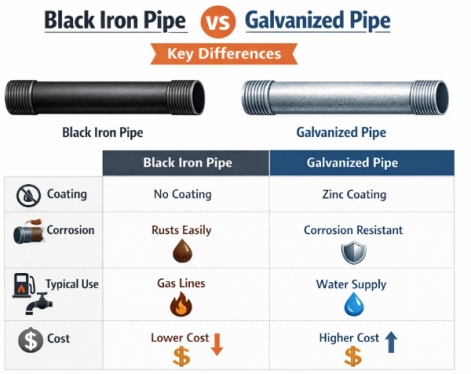
Galvanized Pipe: Galvanized pipe uses black iron pipe as the base material. A 60-80μm zinc-iron alloy layer is formed on the surface through hot-dip galvanizing or electro-galvanizing processes, effectively isolating oxygen and moisture and preventing corrosion. Depending on the coating process, it is divided into two types: hot-dip galvanizing (long lifespan) and cold galvanizing (low cost but prone to peeling).
1. Corrosion Resistance
The biggest difference lies in corrosion protection.
Black iron pipe rusts easily when exposed to moisture.
Galvanized pipe has a zinc layer that protects the steel from rust and oxidation.
This makes galvanized pipes more suitable for outdoor environments and water systems.
2. Application
Each pipe type is optimized for specific uses.
Black iron pipe is preferred for gas transportation because the zinc coating in galvanized pipes may react with natural gas over time, potentially causing flaking inside the pipe.
On the other hand, galvanized pipes are widely used for water distribution systems due to their corrosion resistance.
3. Appearance
The visual difference is easy to recognize.
Black iron pipe → dark matte finish
Galvanized pipe → silver metallic surface
This difference comes directly from the presence or absence of the zinc coating.
4. Service Life
Galvanized pipes generally have a longer lifespan in environments exposed to water or humidity.
Typical service life:
Black iron pipe: 20–30 years depending on environment
Galvanized pipe: 40–70 years with proper installation
In conclusion, the difference between ferrous iron pipes and galvanized pipes is essentially a trade-off between "original performance" and "enhanced protection." In engineering practice, only by combining material characteristics, environmental requirements, and cost budgets can the optimal choice be made. With the popularization of green building materials concepts, the pipeline industry may see more innovative products that balance performance and environmental protection in the future, but understanding the fundamental differences between traditional pipe materials remains essential knowledge for engineers.
Black pipe and galvanized(GI) pipe are two common pipe types. Black pipe, also known as steel pipe, is made of carbon steel with a dark iron oxide coating on the surface. GI pipe, also known as galvanized iron pipe, is made of steel coated with zinc to prevent rust and corrosion.
Both black steel pipes and galvanized steel pipes are made of steel. However, galvanized steel pipes undergo an additional galvanizing process compared to black steel pipes. Black steel pipes are less durable and have a matte black appearance. Galvanized steel pipes, on the other hand, are very durable and have a silvery appearance.
Although they share the same composition, their properties differ. One significant difference is that galvanized pipes have an additional layer of zinc coating on their surface.
However, black steel pipes do not undergo any additional coating treatment. Steel itself isn't black, right? So, why do black steel pipes appear matte black? This is an interesting question. Actually, during the manufacturing process, iron comes into contact with oxygen.
Therefore, a layer of iron oxide forms on the pipe surface. This iron oxide layer gives black steel pipes their black color, while galvanized steel pipes appear silvery. Black steel pipes are commonly used for gas transmission pipelines. However, because galvanized steel pipes have better corrosion resistance, they are often used for water transmission pipelines.
Definition and Material Differences
Black Iron Pipe:Also known as ordinary welded steel pipe, black iron pipe is made of ordinary carbon steel. Its surface is untreated, exhibiting a natural metallic gray-black color. Its manufacturing process is simple, directly formed by hot rolling or cold drawing, without galvanizing, passivation, or other surface treatments.Galvanized Pipe: Galvanized pipe uses black iron pipe as the base material. A 60-80μm zinc-iron alloy layer is formed on the surface through hot-dip galvanizing or electro-galvanizing processes, effectively isolating oxygen and moisture and preventing corrosion. Depending on the coating process, it is divided into two types: hot-dip galvanizing (long lifespan) and cold galvanizing (low cost but prone to peeling).
1. Corrosion Resistance
The biggest difference lies in corrosion protection.
Black iron pipe rusts easily when exposed to moisture.
Galvanized pipe has a zinc layer that protects the steel from rust and oxidation.
This makes galvanized pipes more suitable for outdoor environments and water systems.
2. Application
Each pipe type is optimized for specific uses.
Black iron pipe is preferred for gas transportation because the zinc coating in galvanized pipes may react with natural gas over time, potentially causing flaking inside the pipe.
On the other hand, galvanized pipes are widely used for water distribution systems due to their corrosion resistance.
3. Appearance
The visual difference is easy to recognize.
Black iron pipe → dark matte finish
Galvanized pipe → silver metallic surface
This difference comes directly from the presence or absence of the zinc coating.
4. Service Life
Galvanized pipes generally have a longer lifespan in environments exposed to water or humidity.
Typical service life:
Black iron pipe: 20–30 years depending on environment
Galvanized pipe: 40–70 years with proper installation
Conclusion
Despite these challenges, ferrous iron pipes and galvanized pipes, with their mature industrial chains and cost-effectiveness, will continue to occupy a significant share of the pipeline market over the next 5-10 years. For ordinary projects, the key to rational choice lies in using ferrous iron pipes for short-term, dry, and low-cost scenarios, and galvanized pipes for long-term, humid, and durable requirements.In conclusion, the difference between ferrous iron pipes and galvanized pipes is essentially a trade-off between "original performance" and "enhanced protection." In engineering practice, only by combining material characteristics, environmental requirements, and cost budgets can the optimal choice be made. With the popularization of green building materials concepts, the pipeline industry may see more innovative products that balance performance and environmental protection in the future, but understanding the fundamental differences between traditional pipe materials remains essential knowledge for engineers.