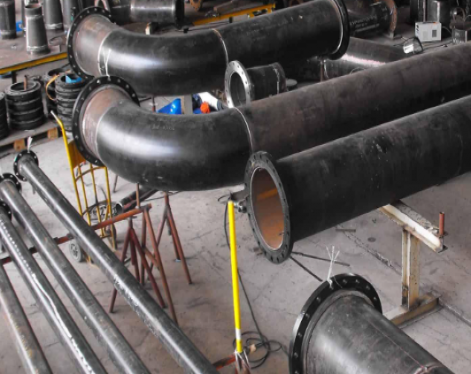
Concrete Weight Coating (CWC) is a heavy reinforced concrete layer applied to the external surface of steel pipelines. Its primary function is to provide negative buoyancy, mechanical protection, and structural stability, especially in offshore and underwater environments.In deepwater oil and gas projects, seamless pipes and welded steel pipes are commonly combined using CWC (continuously welded) technology.
Cement mortar anti-corrosion pipe is a common pipe anti-corrosion product, mainly composed of steel pipe and cement mortar. Its function is to completely wrap the surface of the steel pipe by coating it with a layer of cement mortar with a thickness of about 2-3mm, preventing the steel pipe from being corroded.
1. Providing Buoyancy Control
The added concrete mass ensures the pipeline remains stable on the seabed or riverbed.
2. Enhancing Mechanical Protection
The thick concrete layer protects the pipe from:
External impacts
Anchor damage
Rock backfilling stress
Installation handling damage
3. Improving Seabed Stability
CWC increases friction between the pipe and soil, reducing movement caused by waves and currents.
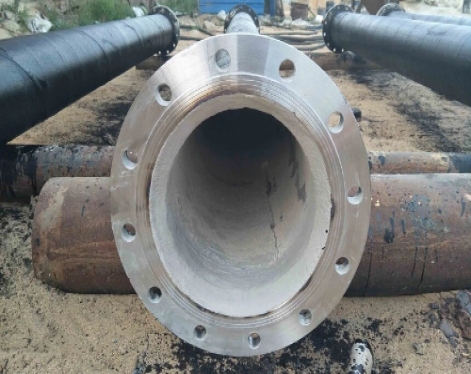
2. High temperature resistance: Cement mortar anti-corrosion pipes can be used at relatively high temperatures, making them suitable for some special environments.
3. Good durability: Cement mortar anti-corrosion pipes have a long service life, reducing the frequency of maintenance and replacement.
4. Convenient construction: The construction of cement mortar anti-corrosion pipes is relatively simple, requiring no special equipment or technology.
Petroleum: Oil transportation pipelines, process pipelines for transporting corrosive media in chemical, pharmaceutical, and printing and dyeing industries.
Sewage treatment: Sewage treatment discharge pipes, sewage pipes, and anti-corrosion engineering for biological treatment ponds.
Agriculture: Agricultural irrigation pipes, deep well pipes, drainage pipe networks, etc.
For offshore oil & gas pipelines, cross-river installations, and subsea infrastructure, Concrete Weight Coating remains the industry-standard stabilization method.
Cement mortar anti-corrosion pipe is a common pipe anti-corrosion product, mainly composed of steel pipe and cement mortar. Its function is to completely wrap the surface of the steel pipe by coating it with a layer of cement mortar with a thickness of about 2-3mm, preventing the steel pipe from being corroded.
Why Concrete Weight Coating Is Necessary?
When pipelines are installed underwater or in high groundwater areas, buoyancy forces can cause floating, shifting, or instability. Concrete Weight Coating solves this problem by:1. Providing Buoyancy Control
The added concrete mass ensures the pipeline remains stable on the seabed or riverbed.
2. Enhancing Mechanical Protection
The thick concrete layer protects the pipe from:
External impacts
Anchor damage
Rock backfilling stress
Installation handling damage
3. Improving Seabed Stability
CWC increases friction between the pipe and soil, reducing movement caused by waves and currents.
The main characteristics of cement mortar anti-corrosion pipes are:
1. Corrosion resistance: Cement mortar has excellent corrosion resistance, effectively protecting steel pipes from corrosion.2. High temperature resistance: Cement mortar anti-corrosion pipes can be used at relatively high temperatures, making them suitable for some special environments.
3. Good durability: Cement mortar anti-corrosion pipes have a long service life, reducing the frequency of maintenance and replacement.
4. Convenient construction: The construction of cement mortar anti-corrosion pipes is relatively simple, requiring no special equipment or technology.
Construction Process of Cement Mortar Inside Corrosion-Proof Pipes:
A mixture of cement, sand, and water is called cement mortar. A 1:3 cement mortar is often referred to as a mixture of one part cement and three parts sand, but this actually ignores the water content, which is generally around 0.6. This should be called 0.6:1:3 cement mortar. In construction engineering, cement mortar is primarily used for foundations and masonry walls, as a binder for large masonry materials such as jigsaw blocks and red bricks; it is also used for interior and exterior plastering. When using cement mortar, additives such as micro-foaming agents and water-based powders are often added to improve its workability and viscosity. A certain proportion of crushed stone and cement mortar are added to create concrete.Cement mortar anti-corrosion steel pipes are used in:
Municipal engineering: Suitable for water supply in high-rise buildings, heating networks, tap water projects, gas transmission, buried water pipelines, etc.Petroleum: Oil transportation pipelines, process pipelines for transporting corrosive media in chemical, pharmaceutical, and printing and dyeing industries.
Sewage treatment: Sewage treatment discharge pipes, sewage pipes, and anti-corrosion engineering for biological treatment ponds.
Agriculture: Agricultural irrigation pipes, deep well pipes, drainage pipe networks, etc.
Conclusion
Concrete Weight Coating is a critical solution for offshore and underwater pipeline projects. By combining added mass, mechanical protection, and long-term durability, it ensures pipeline stability and safety in challenging environments.For offshore oil & gas pipelines, cross-river installations, and subsea infrastructure, Concrete Weight Coating remains the industry-standard stabilization method.