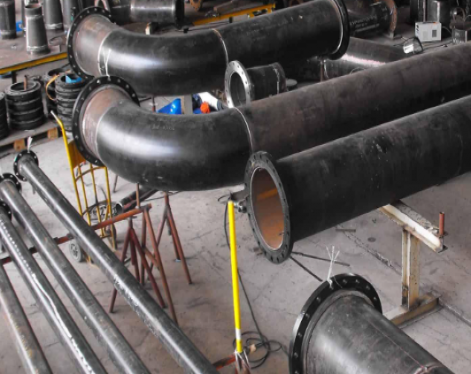
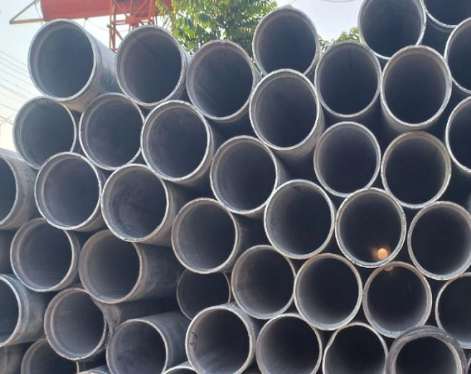
Galvanized welded steel pipes typically use welded steel pipes (such as ERW pipes) as the base material, and a zinc layer is formed on the inner and outer surfaces of the pipe through hot-dip galvanizing or electro-galvanizing processes to improve corrosion resistance. These steel pipes combine the advantages of low cost and wide range of specifications of welded steel pipes with the rust-proof capabilities provided by the galvanized coating.
The quality inspection of welds in welded galvanized steel pipes mainly includes three categories of methods: visual inspection, non-destructive testing, and destructive testing. These inspections must be carried out in accordance with national standards such as GB/T 3091 and GB/T 31032.
This method uses X-rays or gamma rays to penetrate the weld, displaying internal defects through film or digital imaging. It is mainly used to detect volumetric defects such as pores, slag inclusions, lack of fusion, and incomplete penetration. The standard followed is GB/T 3323. It offers high detection sensitivity and can visually display the shape and location of defects.
2. Ultrasonic Testing (UT)
This method transmits high-frequency sound waves into the weld, identifying the location and size of internal defects based on the reflected signals. It is suitable for detecting deep-seated problems such as cracks, lack of fusion, and incomplete penetration. The standard followed is GB/T 11345. It is fast and cost-effective, allowing for precise localization and quantification of defects.
3. Magnetic Particle Testing (MT)
After applying a magnetic field to ferromagnetic materials, a leakage magnetic field is generated at surface and near-surface defects, attracting magnetic particles to form magnetic traces that display the defects. It is mainly used to detect surface and near-surface defects such as cracks, folds, and laminations. The standard followed is GB/T 12606.
4. Penetrant Testing (PT)
A penetrant liquid is applied to the weld surface, penetrating into open defects through capillary action. A developer is then used to draw out the penetrant, displaying the defects. It is suitable for detecting open surface defects in non-porous materials, such as microcracks and pores. It offers high sensitivity and is easy to operate.
5. Eddy Current Testing (ET)
This method utilizes the principle of electromagnetic induction to detect surface and near-surface defects, such as corrosion and wear. It is fast, non-contact, and suitable for rapid testing on mass production lines.
1. Based on Standards: First, follow the standards applicable to the product (e.g., API 5L, ASTM A106, GB/T 8163, etc.). These standards will clearly specify the required non-destructive testing methods and acceptance levels.
Define Objectives:
2. Detecting Internal Defects: Ultrasonic testing (UT) or radiographic testing (RT) is preferred.
Detecting Surface/Near-Surface Defects: Magnetic particle testing (MT) for ferromagnetic materials, and penetrant testing (PT) or eddy current testing (ET) for non-ferromagnetic materials.
3. Online High-Speed Automated Inspection: Eddy current testing (ET) or magnetic flux leakage (MFL) is commonly used.
Thickness or Coating Measurement: Ultrasonic testing (UT) or eddy current testing (ET) is used.
4. Verifying Comprehensive Performance: Destructive testing (tensile, impact, etc.) and chemical composition analysis are necessary.
Combined Application: To ensure complete reliability, important steel pipes (such as high-pressure boiler tubes and deep-sea pipeline pipes) often employ a combination of testing methods such as "UT + ET + MT/PT".
With the right tools, trained inspectors, and compliance with standards like ASTM A53/A53M, GB/T 3091, ISO 10893, and ASME/API codes, manufacturers and inspectors can ensure welded galvanized pipes are reliable, safe, and long-lasting in their intended service environments.
The quality inspection of welds in welded galvanized steel pipes mainly includes three categories of methods: visual inspection, non-destructive testing, and destructive testing. These inspections must be carried out in accordance with national standards such as GB/T 3091 and GB/T 31032.
Visual Inspection
Visual inspection is the most basic quality control method. The weld surface is observed with the naked eye or a low-magnification magnifying glass (generally no more than 10x magnification) to check for surface defects such as cracks, pores, slag inclusions, incomplete penetration, undercut, weld spatter, and depressions. At the same time, a weld inspection gauge is used to measure geometric dimensions such as weld width, reinforcement height, and undercut depth, ensuring that the weld width is uniform (usually 12-16mm), the reinforcement height does not exceed 3mm, and the undercut depth is ≤0.5mm with a continuous length ≤100mm.Common Standards for Weld Inspection of Welded Galvanized Steel Pipes
ASTM and ISO Weld Inspection Standards
To ensure the consistency of weld inspection results for welded galvanized steel pipes, ASTM and ISO standards are primarily used internationally. ASTM A53/A53M applies to black pipes and hot-dip galvanized welded steel pipes, requiring electrical testing or hydrostatic testing of the welds; ASTM F1083 is used for hot-dip galvanized welded steel pipes for structural purposes, specifying requirements for weld appearance and manufacturing quality. The ISO 10893 series is a general standard for non-destructive testing of steel pipe welds, covering radiographic, ultrasonic, and eddy current testing methods. ISO 17636 and ISO 17640 specify the procedures and acceptance criteria for radiographic and ultrasonic testing, respectively.ASME, API, and Chinese National Standards (GB/T)
In the engineering and pipeline fields, the ASME Boiler and Pressure Vessel Code Section V specifies non-destructive testing methods and operational requirements for welds, and API 1104 is widely used for pipeline welding and weld inspection. In China, GB/T 3091 applies to welded galvanized steel pipes for low-pressure fluid transportation, while GB/T 13793 specifies the quality control and inspection rules for welds of straight-seam resistance welded steel pipes.
Non-Destructive Testing Methods
1. Radiographic Testing (RT)This method uses X-rays or gamma rays to penetrate the weld, displaying internal defects through film or digital imaging. It is mainly used to detect volumetric defects such as pores, slag inclusions, lack of fusion, and incomplete penetration. The standard followed is GB/T 3323. It offers high detection sensitivity and can visually display the shape and location of defects.
2. Ultrasonic Testing (UT)
This method transmits high-frequency sound waves into the weld, identifying the location and size of internal defects based on the reflected signals. It is suitable for detecting deep-seated problems such as cracks, lack of fusion, and incomplete penetration. The standard followed is GB/T 11345. It is fast and cost-effective, allowing for precise localization and quantification of defects.
3. Magnetic Particle Testing (MT)
After applying a magnetic field to ferromagnetic materials, a leakage magnetic field is generated at surface and near-surface defects, attracting magnetic particles to form magnetic traces that display the defects. It is mainly used to detect surface and near-surface defects such as cracks, folds, and laminations. The standard followed is GB/T 12606.
4. Penetrant Testing (PT)
A penetrant liquid is applied to the weld surface, penetrating into open defects through capillary action. A developer is then used to draw out the penetrant, displaying the defects. It is suitable for detecting open surface defects in non-porous materials, such as microcracks and pores. It offers high sensitivity and is easy to operate.
5. Eddy Current Testing (ET)
This method utilizes the principle of electromagnetic induction to detect surface and near-surface defects, such as corrosion and wear. It is fast, non-contact, and suitable for rapid testing on mass production lines.
How to Choose Inspection and Testing Methods
The choice depends on product standards, operating conditions, and acceptance requirements. A typical quality control process is as follows:1. Based on Standards: First, follow the standards applicable to the product (e.g., API 5L, ASTM A106, GB/T 8163, etc.). These standards will clearly specify the required non-destructive testing methods and acceptance levels.
Define Objectives:
2. Detecting Internal Defects: Ultrasonic testing (UT) or radiographic testing (RT) is preferred.
Detecting Surface/Near-Surface Defects: Magnetic particle testing (MT) for ferromagnetic materials, and penetrant testing (PT) or eddy current testing (ET) for non-ferromagnetic materials.
3. Online High-Speed Automated Inspection: Eddy current testing (ET) or magnetic flux leakage (MFL) is commonly used.
Thickness or Coating Measurement: Ultrasonic testing (UT) or eddy current testing (ET) is used.
4. Verifying Comprehensive Performance: Destructive testing (tensile, impact, etc.) and chemical composition analysis are necessary.
Combined Application: To ensure complete reliability, important steel pipes (such as high-pressure boiler tubes and deep-sea pipeline pipes) often employ a combination of testing methods such as "UT + ET + MT/PT".
Conclusion
Inspecting weld quality in galvanized steel pipes is a multi-layered process requiring a strategic combination of methods and adherence to internationally recognized standards. Visual inspection, non-destructive testing techniques (RT, UT, MT, PT, ECT), pressure tests, and destructive qualifications together form a robust quality assurance framework.With the right tools, trained inspectors, and compliance with standards like ASTM A53/A53M, GB/T 3091, ISO 10893, and ASME/API codes, manufacturers and inspectors can ensure welded galvanized pipes are reliable, safe, and long-lasting in their intended service environments.