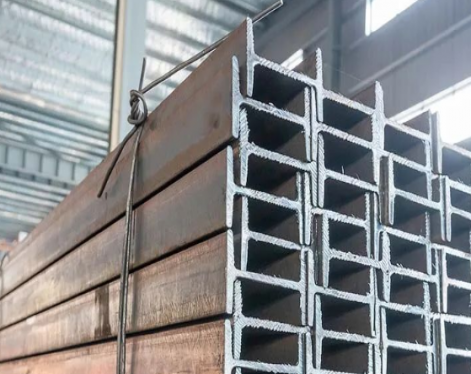
Steel sheet pile are steel structures with interlocking devices on their edges, which can be freely combined to form a continuous and compact retaining or water-retaining wall. Cold-formed sheet piles are steel structures formed by continuous roll forming in a cold-bending unit, with continuous overlapping of the side interlocking joints to form a sheet pile wall. Sheet piles come in several major categories and dozens of specifications, including U-shaped, Z-shaped, L-shaped, S-shaped, and straight types.
As a new type of building material, sheet piles play an important role in bridge cofferdams, large pipeline laying, temporary ditch excavation, retaining walls, water-retaining walls, sand-retaining walls, wharf walls, unloading yard retaining walls, and retaining walls for embankment protection. Sheet pile production began in Europe in the early 20th century, with cold-formed thin-walled lightweight and hot-rolled types. However, due to the greater limitations in processing and use of the former, hot-rolled sheet piles became the mainstream of sheet pile product development and were rapidly adopted worldwide, especially in developed industrialized countries.
A sheet pile wall is generally idealized as a flexural member, as it mainly resists bending stresses from the above mentioned loads. Its strength can be determined from two components: the geometric property of the sheet pile, and the grade of the material to be used.
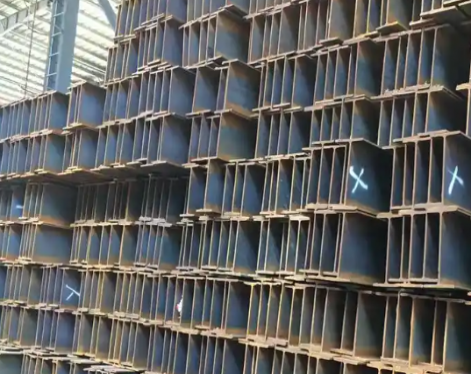
Steel sheet piles are made of high-strength low-alloy steel (HSLA), which has an excellent strength-to-weight ratio, providing greater strength in thinner sections. Main steel grades include Q235, Q295p, Q345p, Q420p, Q460p, Sy295, and Sy390.
Yield Strength: The yield strength of different grades of steel ranges from 235MPa to 460MPa. Taking marine structural steel as an example, AH32 has a yield strength ≥315MPa, AH36 ≥355MPa, and DH32/DH36 maintains good impact toughness at -20℃.
Tensile Strength: Ordinary strength steel is 400-520MPa, while high-strength steel can reach 440-620MPa. Elongation δ5 ≥21-22%, ensuring good ductility.
Cross-Sectional Properties: The cross-sectional properties of steel sheet piles directly affect their bearing capacity. Taking HRU400×170 as an example, its cross-sectional area is 96.99 cm², its theoretical weight is 76.1 kg/m, its moment of inertia Ix = 4670 cm⁴, and its section modulus Wx = 362 cm³. HRU500×225 has a moment of inertia of up to 11400 cm⁴ and a section modulus of 680 cm³, making it suitable for large-span support structures.
The strength-to-weight ratio is the core advantage of sheet piles. The interlock design of Z-type piles maximizes shear force transmission efficiency, while the symmetrical structure of U-type piles facilitates reuse; both achieve a balance between high stiffness and lightweight.
Interlock Strength: The interlock is a critical connection point in sheet piles, and its performance directly affects the overall strength and waterproofing effect of the wall. Hot-rolled sheet piles, due to high-temperature rolling, have tighter interlocks than cold-formed sheet piles, performing better in hard strata or low-permeability applications. The interlock design must meet two main parameters: tensile strength and allowable rotation angle. For cold-formed sheet piles, the interlocking tensile strength of Q235 grade steel can reach 66MPa, ensuring structural integrity under complex stress conditions.
As a new type of building material, sheet piles play an important role in bridge cofferdams, large pipeline laying, temporary ditch excavation, retaining walls, water-retaining walls, sand-retaining walls, wharf walls, unloading yard retaining walls, and retaining walls for embankment protection. Sheet pile production began in Europe in the early 20th century, with cold-formed thin-walled lightweight and hot-rolled types. However, due to the greater limitations in processing and use of the former, hot-rolled sheet piles became the mainstream of sheet pile product development and were rapidly adopted worldwide, especially in developed industrialized countries.
A sheet pile wall is generally idealized as a flexural member, as it mainly resists bending stresses from the above mentioned loads. Its strength can be determined from two components: the geometric property of the sheet pile, and the grade of the material to be used.
Strength Characteristics of Steel Sheet Piles
Material Mechanical PropertiesSteel sheet piles are made of high-strength low-alloy steel (HSLA), which has an excellent strength-to-weight ratio, providing greater strength in thinner sections. Main steel grades include Q235, Q295p, Q345p, Q420p, Q460p, Sy295, and Sy390.
Yield Strength: The yield strength of different grades of steel ranges from 235MPa to 460MPa. Taking marine structural steel as an example, AH32 has a yield strength ≥315MPa, AH36 ≥355MPa, and DH32/DH36 maintains good impact toughness at -20℃.
Tensile Strength: Ordinary strength steel is 400-520MPa, while high-strength steel can reach 440-620MPa. Elongation δ5 ≥21-22%, ensuring good ductility.
Cross-Sectional Properties: The cross-sectional properties of steel sheet piles directly affect their bearing capacity. Taking HRU400×170 as an example, its cross-sectional area is 96.99 cm², its theoretical weight is 76.1 kg/m, its moment of inertia Ix = 4670 cm⁴, and its section modulus Wx = 362 cm³. HRU500×225 has a moment of inertia of up to 11400 cm⁴ and a section modulus of 680 cm³, making it suitable for large-span support structures.
The strength-to-weight ratio is the core advantage of sheet piles. The interlock design of Z-type piles maximizes shear force transmission efficiency, while the symmetrical structure of U-type piles facilitates reuse; both achieve a balance between high stiffness and lightweight.
Interlock Strength: The interlock is a critical connection point in sheet piles, and its performance directly affects the overall strength and waterproofing effect of the wall. Hot-rolled sheet piles, due to high-temperature rolling, have tighter interlocks than cold-formed sheet piles, performing better in hard strata or low-permeability applications. The interlock design must meet two main parameters: tensile strength and allowable rotation angle. For cold-formed sheet piles, the interlocking tensile strength of Q235 grade steel can reach 66MPa, ensuring structural integrity under complex stress conditions.