The OCTG casing size chart is an important reference document for oil and gas drilling operations. Casing is installed in oil and gas wells to stabilize the wellbore, isolate formations, and prevent wellbore collapse under high pressure and high temperature conditions. Selecting the appropriate casing size ensures the integrity, safety, and long-term performance of the oil well.
This article provides a complete OCTG casing size chart, including outer diameter, wall thickness, and weight. This data is based on API 5CT standards and industry-accepted data from top technical sources.
1.Casing Pipe – Stabilizes the wellbore and prevents collapse
2.Tubing Pipe – Transports oil and gas from the reservoir to the surface
3.Drill Pipe – Transmits drilling torque and drilling fluid
All OCTG products are typically manufactured according to API 5CT (casing & tubing) and API 5DP (drill pipe).
Below is a standard API 5CT OCTG casing pipe size chart, commonly used in oil and gas wells worldwide.
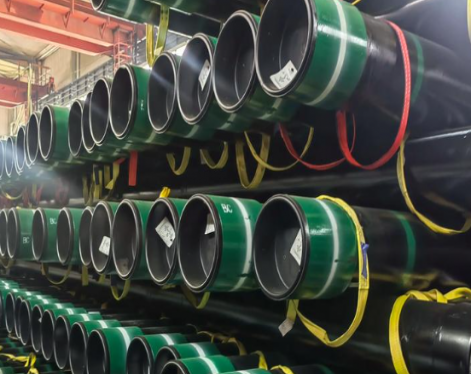
According to API SPEC 5CT, casing steel grades include H40, J55, K55, N80, L80, C90, T95, P110, Q125, V150, etc. . The number in the grade name typically indicates the minimum yield strength in units of 1,000 psi (e.g., N80 has a minimum yield strength of 80,000 psi or approximately 552 MPa) . Different grades are selected based on well depth and conditions: J55 for shallow, low-pressure wells; N80 series for medium-depth wells; P110, V150 for ultra-deep wells and complex geological condition.
Thread Types
Short Thread Casing (STC): Suitable for general well conditions .
Long Thread Casing (LTC): Suitable for deeper well conditions .
Buttress Thread Casing (BTC): Suitable for deep and ultra-deep wells .
Premium Connections: Non-API threaded connections developed by manufacturers with special sealing, connection, and other performance characteristics, such as VAM, TM, FOX, etc. These are used when API threads are inadequate, especially in high-pressure gas fields or with high-grade pipes (e.g., Q125 and above)
Downhole pressure and temperature extremes
Threaded connections instead of welding
Collapse and burst resistance
Therefore, OCTG casing size charts cannot be replaced by standard pipeline schedules.
The most common sizes are 5 1/2 inch, 7 inch, and 9 5/8 inch.
Are OCTG casing pipe sizes standardized worldwide?
Yes, API 5CT provides globally recognized size and tolerance standards.
Can OCTG casing pipes be customized?
Yes. Wall thickness, steel grade, and premium connections can be customized based on project requirements.
This article provides a complete OCTG casing size chart, including outer diameter, wall thickness, and weight. This data is based on API 5CT standards and industry-accepted data from top technical sources.
What Are OCTG Pipes?
OCTG pipes mainly include three categories:1.Casing Pipe – Stabilizes the wellbore and prevents collapse
2.Tubing Pipe – Transports oil and gas from the reservoir to the surface
3.Drill Pipe – Transmits drilling torque and drilling fluid
All OCTG products are typically manufactured according to API 5CT (casing & tubing) and API 5DP (drill pipe).
API Standards for OCTG Casing Pipes
| Standard | Description |
| API 5CT | Specification for casing and tubing |
| API 5B | Threading, gauging, and inspection |
| ISO 11960 | International equivalent of API 5CT |
OCTG Casing Pipe Size Chart (API 5CT)
Below is a standard API 5CT OCTG casing pipe size chart, commonly used in oil and gas wells worldwide.
| Nominal Diameter (mm) | Outside Diameter (mm) | Wall Thickness (mm) | Unit Weight (kg/m) | Grade | Thread Type |
| 139.7 | 139.7 | 6.2 | 20.83 | J55 | LTC |
| 139.7 | 139.7 | 6.98 | 23.07 | J55 | STC |
| 139.7 | 139.7 | 7.72 | 25.3 | N80 | BTC |
| 177.8 | 177.8 | 5.87 | 25.3 | J55 | LTC |
| 177.8 | 177.8 | 6.91 | 29.76 | J55 | STC |
| 177.8 | 177.8 | 8.05 | 34.23 | N80 | BTC |
| 177.8 | 177.8 | 9.19 | 38.69 | N80 | BTC |
| 219.08 | 219.08 | 6.71 | 35.72 | J55 | LTC |
| 219.08 | 219.08 | 7.72 | 41.67 | J55 | STC |
| 219.08 | 219.08 | 8.94 | 47.62 | N80 | BTC |
| 219.08 | 219.08 | 10.16 | 53.57 | P110 | BTC |
| 244.48 | 244.48 | 7.92 | 48.07 | J55 | LTC |
| 244.48 | 244.48 | 8.94 | 53.57 | J55 | STC |
| 244.48 | 244.48 | 8.94 | 53.57 | N80 | BTC |
| 244.48 | 244.48 | 10.03 | 59.53 | N80 | BTC |
| 273.05 | 273.05 | 7.09 | 48.74 | J55 | LTC |
| 273.05 | 273.05 | 8.89 | 60.27 | J55 | STC |
| 273.05 | 273.05 | 10.16 | 67.71 | N80 | BTC |
| 273.05 | 273.05 | 11.43 | 75.9 | P110 | BTC |
| 339.72 | 339.72 | 8.38 | 71.43 | J55 | LTC |
| 339.72 | 339.72 | 9.65 | 81.1 | N80 | STC |
| 339.72 | 339.72 | 10.92 | 90.78 | N80 | BTC |
| 339.72 | 339.72 | 12.19 | 101.19 | P110 | BTC |
Steel Grades and Thread Types
Steel GradesAccording to API SPEC 5CT, casing steel grades include H40, J55, K55, N80, L80, C90, T95, P110, Q125, V150, etc. . The number in the grade name typically indicates the minimum yield strength in units of 1,000 psi (e.g., N80 has a minimum yield strength of 80,000 psi or approximately 552 MPa) . Different grades are selected based on well depth and conditions: J55 for shallow, low-pressure wells; N80 series for medium-depth wells; P110, V150 for ultra-deep wells and complex geological condition.
Thread Types
Short Thread Casing (STC): Suitable for general well conditions .
Long Thread Casing (LTC): Suitable for deeper well conditions .
Buttress Thread Casing (BTC): Suitable for deep and ultra-deep wells .
Premium Connections: Non-API threaded connections developed by manufacturers with special sealing, connection, and other performance characteristics, such as VAM, TM, FOX, etc. These are used when API threads are inadequate, especially in high-pressure gas fields or with high-grade pipes (e.g., Q125 and above)
Typical Applications of OCTG Casing Pipes
| Casing Type | Typical Size Range | Function |
| Surface Casing | 9 5/8" – 20" | Protects freshwater zones |
| Intermediate Casing | 7" – 13 3/8" | Isolates pressure formations |
| Production Casing | 4 1/2" – 9 5/8" | Supports oil & gas production |
| Liner Casing | 4 1/2" – 7" | Cost-effective well completion |
OCTG Casing Pipe vs Line Pipe
Unlike API 5L line pipes, OCTG casing pipes are designed for:Downhole pressure and temperature extremes
Threaded connections instead of welding
Collapse and burst resistance
Therefore, OCTG casing size charts cannot be replaced by standard pipeline schedules.
(FAQ)
What is the most commonly used OCTG casing size?The most common sizes are 5 1/2 inch, 7 inch, and 9 5/8 inch.
Are OCTG casing pipe sizes standardized worldwide?
Yes, API 5CT provides globally recognized size and tolerance standards.
Can OCTG casing pipes be customized?
Yes. Wall thickness, steel grade, and premium connections can be customized based on project requirements.