What is black steel pipe?
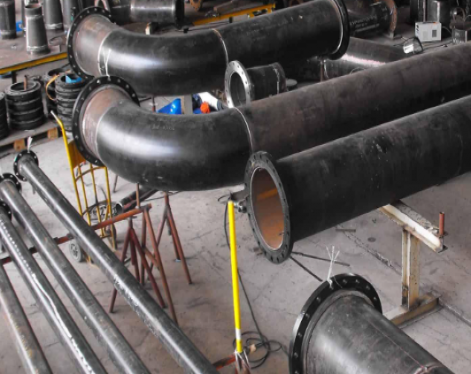
Black steel pipes are made of steel that has not been coated with a substrate such as zinc or paint. Since it has a dark color surface that is forms by iron oxide during the manufacturing process, it is called black steel pipe.Seamless black steel pipes
Seamless pipes are manufactured by extruding the metal to the desired length. Thus, they do not have any joint in its cross-section throughout its length.Material of Seamless Black Steel Pipe
The material standards for seamless black steel pipes typically refer to the specific steel grades, chemical compositions, and manufacturing specifications employed. While the applicable standards may vary across different countries and fields of application, the most common categories generally include the following:| Standard | Material Grade | Main Application |
| ASTM A106 | Grade A / B / C | High-temperature and pressure piping |
| ASTM A53 | Grade A / B | General fluid, gas, and structural use |
| API 5L | Grade B, X42–X70 | Oil and gas pipeline transportation |
| ASTM A333 | Grade 1 / 6 | Low-temperature service |
| EN 10216 | P235TR1 / P265TR1 | European pressure piping systems |
| JIS G3454 | STPG370 / STPG410 | Pressure piping in Japan |
| DIN 1629 | St37 / St52 | German industrial piping |
Among these standards, ASTM A106 Grade B is the most common material specification for seamless black steel pipes, widely utilized in systems for conveying steam, petroleum, natural gas, and high-temperature fluids. In contrast, ASTM A53 is better suited for general low-pressure fluid transport and structural applications, while API 5L is primarily designated for long-distance oil and gas transmission pipelines.
In terms of material composition, seamless black steel pipes typically consist of low-carbon steel or carbon-manganese steel. As their surfaces are not galvanized, they exhibit a black oxide scale appearance—the very origin of the term "black steel pipe." Common chemical elements found in these pipes include carbon (C), manganese (Mn), and silicon (Si), along with trace amounts of elements such as phosphorus and sulfur.
Manufacturing process of seamless black steel pipes
How are black steel pipes different from carbon steel pipes?
In general, black steel pipes and carbon steel pipes have almost the same procedures for welding. That is in the case of general welding, but not of some specific application like very cold temperatures. Black steel pipe is not really a specification but rather a generic term used primarily by plumbers to distinguish regular steel pipe from galvanized steel pipe.
Black steel pipes are cast from several grades of ductile or malleable iron, whereas carbon steel pipes are generally welded or seamless. Black steel pipes are used for underground or submerged applications as well as for mainstream pipes and branches subjected to acids. It is also common to use cast iron pipes and fittings for municipal cold-water lines 4″ diameter and above. Commercial die casting is unsuitable for lines subjected to expansion strains, contractions, and vibration unless the pipe is very heavy. It is not suitable for superheated steam or for temperatures above 575 degrees F. Cast iron pipes in underground applications (such as sewer lines) usually have bell and spigot ends whereas exposed pipes usually have flanged ends.
Application of Seamless black steel pipe
1. Low-to-Medium Pressure Fluid Transport Pipelines
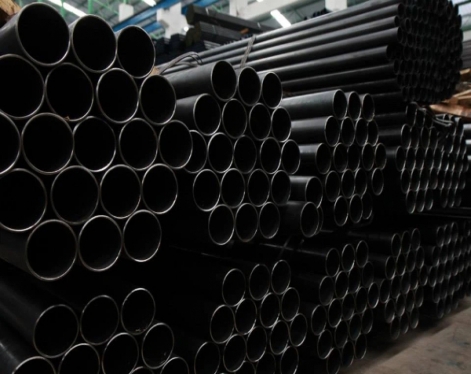
Seamless black steel pipes are used to transport water, steam, oil, gas, and compressed air in industrial and municipal systems. Their seamless structure improves pressure resistance and reduces leakage risks.
2. Casing Tubes
During the drilling process, seamless black steel pipes are lowered into the borehole to reinforce the well walls, prevent formation collapse, and isolate the borehole from groundwater aquifers. Given the complex downhole environment—characterized by intense earth stresses and rock formation compression—the piping material must possess exceptionally high crush resistance and tensile strength. The seamless manufacturing process is the only method capable of meeting these rigorous strength requirements.
3. Boiler Tubes
Boiler tubes operate continuously under extreme conditions involving high temperatures (sometimes exceeding 500°C), high pressures (reaching upwards of 10 MPa), and the erosive scouring of high-velocity gas flows. Seamless black steel pipes used in this context (such as those conforming to ASTM A106 or ASTM A192 standards) must exhibit superior thermal strength (resistance to softening at high temperatures) and oxidation resistance.
4. Oil and Natural Gas Industry
This sector is a major consumer of seamless black steel pipes, utilizing them throughout the entire process—from extraction to transportation.In addition to the aforementioned casing tubes, applications include line pipes and tubing.
5. Chemical Industry
The chemical industry imposes the most stringent requirements on piping systems, involving exposure to complex corrosive media and extreme process conditions. Seamless black steel pipes used in chemical applications typically require specialized alloy compositions (such as stainless steel, chromium-molybdenum alloy steel, etc.).
6. Power Industry
The power industry represents a highly concentrated sector for the application of boiler tubes and specialized seamless pipes. Beyond traditional thermal power generation (which relies heavily on boiler tubes), the industry encompasses nuclear power, wind power, and power transmission and distribution. In nuclear power plants, the piping systems within the reactor coolant loops must be constructed using seamless alloy steel pipes manufactured to the most exacting standards.