In steel structure engineering, the quality of H-beams directly determines the safety of the project. Choosing the wrong ones not only results in rework and financial losses but also leaves permanent hidden dangers. Today, I'll teach you a three-step inspection process so even beginners can avoid these pitfalls.
In addition to the above, the following points should also be noted.
1. Define the Application
Start by identifying where and how the H beam will be used. Load requirements, span, and environment all affect the selection. Clear application needs help avoid overdesign or structural risk.
2. Choose the Right Size
Select dimensions based on structural calculations. Key factors include height, flange width, and thickness. The correct size ensures enough strength without unnecessary cost.
3. Select Suitable Steel Grade
Pick the material grade according to load demands. Q235 works for general use, while Q345, ASTM A36, or S355 are better for higher strength requirements.
4. Check Standards Compliance
Ensure the H beam meets standards such as ASTM, EN, or GB. Certified products guarantee consistent quality and easier project approval.
5. Consider Manufacturing Method
Hot rolled H beams provide better stability and strength. Welded H beams are suitable for customized sizes and special projects.
6. uate Supplier Reliability
Choose a supplier with proven experience, quality control, and stable delivery. A reliable supplier ensures consistent performance and reduces project risks.
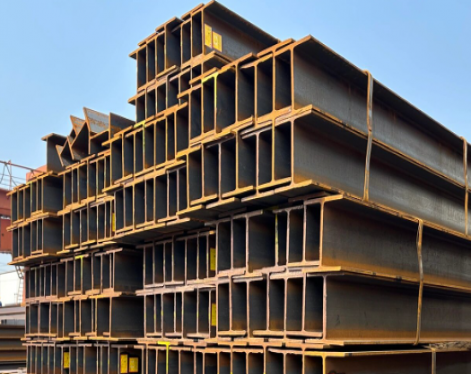
A systematic approach to H beam selection not only improves construction quality but also reduces risks and ensures long-term reliability.
How to choose H-beams?
H-beams, as an economical and efficient structural material, are named for their cross-sectional shape, which resembles the Latin letter "H." Their unique cross-sectional design endows them with excellent mechanical properties: strong bending stiffness and load-bearing capacity in both principal axes, while remaining relatively lightweight. They serve as the "skeleton" and "backbone" of modern building structures, industrial plants, bridges, and equipment foundations. To correctly and economically select H-beams, it is necessary to deeply understand the inherent relationship between their types, materials, and specific application scenarios. The first step is to conduct a structural mechanics analysis to clarify the stress conditions of the components, thereby determining the type series (HW/HM/HN) and approximate dimensions. The second step is to consider the application environment (static/dynamic load, normal/low temperature, indoor/outdoor) to determine the requirements for material strength, toughness, and weather resistance, and then determine the specific steel grade and level (such as Q235B or Q355C).In addition to the above, the following points should also be noted.
1. Define the Application
Start by identifying where and how the H beam will be used. Load requirements, span, and environment all affect the selection. Clear application needs help avoid overdesign or structural risk.
2. Choose the Right Size
Select dimensions based on structural calculations. Key factors include height, flange width, and thickness. The correct size ensures enough strength without unnecessary cost.
3. Select Suitable Steel Grade
Pick the material grade according to load demands. Q235 works for general use, while Q345, ASTM A36, or S355 are better for higher strength requirements.
4. Check Standards Compliance
Ensure the H beam meets standards such as ASTM, EN, or GB. Certified products guarantee consistent quality and easier project approval.
5. Consider Manufacturing Method
Hot rolled H beams provide better stability and strength. Welded H beams are suitable for customized sizes and special projects.
6. uate Supplier Reliability
Choose a supplier with proven experience, quality control, and stable delivery. A reliable supplier ensures consistent performance and reduces project risks.
Conclusion
Choosing the right H beam requires a clear understanding of your project needs, from load requirements to environmental conditions. By carefully selecting the size, material, standard, and supplier, you can achieve a balance between safety, performance, and cost.A systematic approach to H beam selection not only improves construction quality but also reduces risks and ensures long-term reliability.