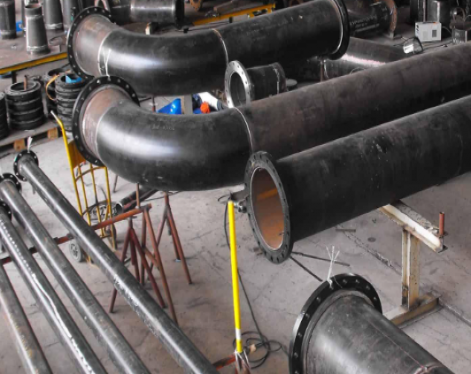
LSAW steel pipes, with their high strength, excellent toughness, and extremely high pressure resistance, have become a core component in fields such as oil and gas transportation, building steel structures, water conservancy projects, and even deep-sea piling. However, for this "thousand-mile horse" to make significant contributions in engineering projects, the material itself alone is not enough. Neglecting details during use can easily lead to the expensive steel pipes failing miserably.
As a veteran with many years of experience in engineering, I am well aware of the complexity and difficulty of pipeline construction. Today, we'll discuss several key precautions that must be taken seriously when using LSAW steel pipes to help you avoid pitfalls and detours.
1. Material and Process Matching: LSAW steel pipes typically use cold expansion processes such as JCOE or UOE, which have extremely high requirements for raw materials. When purchasing, it is essential to clearly define the required steel grade (e.g., Q235B, Q345B, X52, etc.) and wall thickness tolerance (usually ≤±10%). If used for drinking water or special chemical media, the chemical composition and mechanical properties of the base pipe must meet national standards (e.g., GB/T 9711 or API 5L).
2. On-site Inspection and Pre-treatment: After the steel pipes arrive on site, do not rush to unload and weld them. First, check the appearance. The pipe surface should be smooth, and fatal defects such as folds, cracks, delamination, and lap welds are absolutely unacceptable. For large-diameter LSAW steel pipes, each pipe should be measured and numbered, and pipe sections with the smallest diameter difference should be selected for assembly to reduce misalignment.
3. Beveling and Rust Removal: Beveling and rust removal before welding are crucial. Oil and rust on both sides of the bevel must be thoroughly cleaned until the metal shines through. Especially if internal corrosion protection is involved (such as applying epoxy coating), the rust removal grade must reach Sa2.5; otherwise, the coating is extremely prone to peeling off.
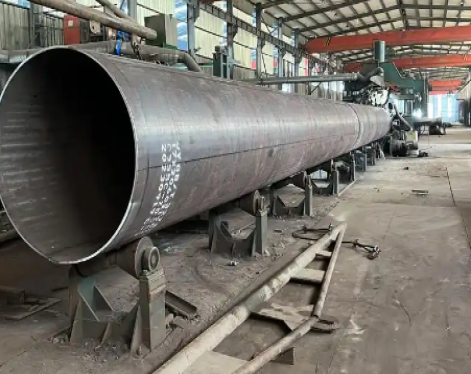
1. Strictly Control Alignment Accuracy: As the saying goes, "A small difference can lead to a huge error." During butt welding, it is imperative to strictly control the misalignment. According to relevant industry standards, the misalignment of the welded joint should generally not exceed 10% of the wall thickness, and the maximum should not exceed 2mm. The deviation per meter for vertically installed risers should be less than 3mm, and the deviation for horizontally installed risers should be less than 1mm.
2. Avoid Weak Points in the Weld: This is a common sense point that is easily overlooked—it is absolutely forbidden to open branch pipes or holes at the weld seam of straight seam steel pipes. At the same time, bends in the pipe should also avoid the weld seam. Because the weld area is a heat-affected zone, its metallographic structure and mechanical properties differ slightly from the base material. Forcibly opening or bending in these areas can easily cause stress concentration or even bursting.
3. Standardize the Welding Environment and Process: Welding is not something you can just "pick up a welding gun and start welding." Welding electrodes and fluxes must be dried according to regulations before use and kept dry during welding. In windy, rainy, snowy, or extremely cold weather (e.g., below +5°C), protective measures must be taken to prevent the weld joint from becoming damp or cracking due to rapid cooling. Welders must also hold the corresponding special operation qualification certificate.
4. Interlayer Cleaning and Weld Formation: In multi-layer welding, the joints between layers must be staggered. Weld slag and spatter must be cleaned promptly after each layer. A qualified weld should be straight, full, and free from burn-through, cracks, porosity, or severe undercut (undercut depth should generally not exceed 0.5mm).
As a veteran with many years of experience in engineering, I am well aware of the complexity and difficulty of pipeline construction. Today, we'll discuss several key precautions that must be taken seriously when using LSAW steel pipes to help you avoid pitfalls and detours.
Preliminary Preparations and Material Selection
"Sharpening the axe doesn't delay the work," meaning thorough preparation before construction can save 80% of the trouble later.1. Material and Process Matching: LSAW steel pipes typically use cold expansion processes such as JCOE or UOE, which have extremely high requirements for raw materials. When purchasing, it is essential to clearly define the required steel grade (e.g., Q235B, Q345B, X52, etc.) and wall thickness tolerance (usually ≤±10%). If used for drinking water or special chemical media, the chemical composition and mechanical properties of the base pipe must meet national standards (e.g., GB/T 9711 or API 5L).
2. On-site Inspection and Pre-treatment: After the steel pipes arrive on site, do not rush to unload and weld them. First, check the appearance. The pipe surface should be smooth, and fatal defects such as folds, cracks, delamination, and lap welds are absolutely unacceptable. For large-diameter LSAW steel pipes, each pipe should be measured and numbered, and pipe sections with the smallest diameter difference should be selected for assembly to reduce misalignment.
3. Beveling and Rust Removal: Beveling and rust removal before welding are crucial. Oil and rust on both sides of the bevel must be thoroughly cleaned until the metal shines through. Especially if internal corrosion protection is involved (such as applying epoxy coating), the rust removal grade must reach Sa2.5; otherwise, the coating is extremely prone to peeling off.
Quality Requirements
Branch pipes must not be welded at weld seams, and welding is prohibited at bends; vertical installation deviation of risers must be less than 3mm, and horizontal installation deviation must be less than 1mm; welds must be straight, the weld seams must be complete, and the weld seam surface must be free of burns and cracks.
Precautions for the Construction, Installation, and Welding of LSAW Steel Pipes
The connection of LSAW steel pipes relies heavily on welding, and the welding quality directly determines the lifeline of the entire pipeline network.1. Strictly Control Alignment Accuracy: As the saying goes, "A small difference can lead to a huge error." During butt welding, it is imperative to strictly control the misalignment. According to relevant industry standards, the misalignment of the welded joint should generally not exceed 10% of the wall thickness, and the maximum should not exceed 2mm. The deviation per meter for vertically installed risers should be less than 3mm, and the deviation for horizontally installed risers should be less than 1mm.
2. Avoid Weak Points in the Weld: This is a common sense point that is easily overlooked—it is absolutely forbidden to open branch pipes or holes at the weld seam of straight seam steel pipes. At the same time, bends in the pipe should also avoid the weld seam. Because the weld area is a heat-affected zone, its metallographic structure and mechanical properties differ slightly from the base material. Forcibly opening or bending in these areas can easily cause stress concentration or even bursting.
3. Standardize the Welding Environment and Process: Welding is not something you can just "pick up a welding gun and start welding." Welding electrodes and fluxes must be dried according to regulations before use and kept dry during welding. In windy, rainy, snowy, or extremely cold weather (e.g., below +5°C), protective measures must be taken to prevent the weld joint from becoming damp or cracking due to rapid cooling. Welders must also hold the corresponding special operation qualification certificate.
4. Interlayer Cleaning and Weld Formation: In multi-layer welding, the joints between layers must be staggered. Weld slag and spatter must be cleaned promptly after each layer. A qualified weld should be straight, full, and free from burn-through, cracks, porosity, or severe undercut (undercut depth should generally not exceed 0.5mm).