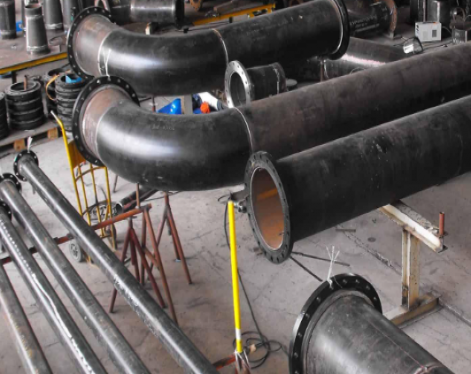
Pipe spool means a section of a piping system that is prefabricated as smaller segments with flanges and fittings. Piping spools are often prone to corrosion due to their exposure to the elements, water, and other natural electrolytes.
Pipe segments are typically pre-assembled in the workshop and then transported to the installation site as ready-to-use units. These include pipes, flanges, elbows, tees, reducers, gaskets, and other piping components. Because pipe segments are manufactured in a controlled environment, they offer greater precision, faster installation speeds, and better quality control compared to on-site fabrication.
1.Material preparation (pipe cutting, beveling, measuring)
2.Fit-up and alignment according to spool drawings
3.Tack welding to hold components in position
4.Final welding using approved WPS (GTAW, SMAW, FCAW, etc.)
5.NDT inspection (RT, UT, MT, PT depending on project requirements)
6.Hydrostatic or pneumatic pressure testing
7.Painting, coating, or galvanizing for corrosion protection
8.Marking, packaging, and documentation before shipment
9.These steps ensure dimensional accuracy and compliance with international standards.
They generally easily corrode because of the elements they exposure; water and natural electrolytes. Acceptable protective monitoring must be done when applying pipe spool systems. Pipe spool fabrication is very important because the construction of the ship and other marine industries require intensive piping. Piping spools create great advantages because they reduce the limitations of space on site. With this advantage, all of the pipeline using industries has a great opportunity to increase their pipeline system efficiency and decrease their need for workforce and time.
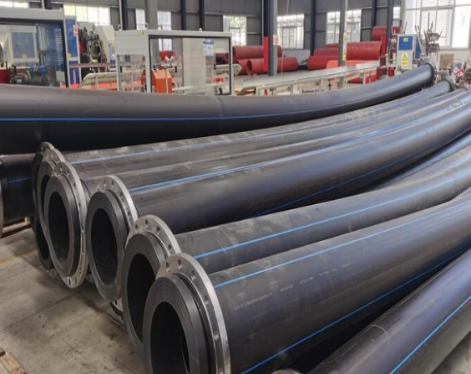
This piping application has two main stages;
1.Pipe Spool Production
2.Site Installation
Piping spools are produced by the usage of raw pipes and pipe fittings. The cutting process of the raw pipes is done with prespecified sizes that are suitable for the pipe fittings and other components.
2. Design Basis:Pipe Systems are designed using P&ID diagrams, while Pipe Spools are made based on isometric drawings for fabrication.
3. Fabrication Location:Pipe Systems are mainly assembled on-site. Pipe Spools are prefabricated in workshops and then delivered for installation.
4. Function and Purpose:Pipe Systems handle fluid transport and control. Pipe Spools improve installation efficiency and construction quality.
5. Project Role:Pipe Systems are the final complete structure. Pipe Spools act as modular units that simplify construction.
This is the most common type of spool piece. It is a straight section of pipe with no openings in the middle. Both ends are usually fitted with flanges, threads, or welding bevels for connection.
Main Features
Connects two pipe sections and extends pipeline length.
Helps correct small installation deviations.
Reduces the impact of thermal expansion and vibration.
Makes pipeline maintenance and replacement easier.
Spool Piping Piece With Liner
The spool piece with liner looks almost the same as a standard spool piece from the outside. The main difference is that it has a protective lining inside the pipe. This lining gives the spool piece additional functions.
Main Features
Protects the pipe from corrosion caused by the transported medium.
Reduces wear on the inner pipe surface.
Prevents contamination of the medium by the pipe material.
Provides some insulation and can improve flow performance.
Pipe segments are typically pre-assembled in the workshop and then transported to the installation site as ready-to-use units. These include pipes, flanges, elbows, tees, reducers, gaskets, and other piping components. Because pipe segments are manufactured in a controlled environment, they offer greater precision, faster installation speeds, and better quality control compared to on-site fabrication.
pipe spool fabrication
Piping spools are fabricated using various types of raw pipes and pipe fittings and they include flanges, elbows, tees, and a lot more. They are usually fabricated offsite. The raw pipes are pre-cut to specific sizes and together with pipe fittings and other components. They are temporarily fitted together. This partially finished sub-assembly is then welded with other spool components.To achieve consistent quality, most companies follow a standardized fabrication workflow. A typical pipe spool fabrication process includes:1.Material preparation (pipe cutting, beveling, measuring)
2.Fit-up and alignment according to spool drawings
3.Tack welding to hold components in position
4.Final welding using approved WPS (GTAW, SMAW, FCAW, etc.)
5.NDT inspection (RT, UT, MT, PT depending on project requirements)
6.Hydrostatic or pneumatic pressure testing
7.Painting, coating, or galvanizing for corrosion protection
8.Marking, packaging, and documentation before shipment
9.These steps ensure dimensional accuracy and compliance with international standards.
Pre-Fabrication of piping spools
Roll correction and welding process are fitting of the main pipe by rolling machine and the welder does not need to change his situation, and also the position of fitting and welding occur when more than one branch of the long pipe overcome the clearance limit. To create a more efficient piping system and save time, pipe spool pre-fabrication is used. Because if the system did not produce preliminary, the welding of the system will take much more time and the welder has to move over the main pipe to accomplish fitting or welding.They generally easily corrode because of the elements they exposure; water and natural electrolytes. Acceptable protective monitoring must be done when applying pipe spool systems. Pipe spool fabrication is very important because the construction of the ship and other marine industries require intensive piping. Piping spools create great advantages because they reduce the limitations of space on site. With this advantage, all of the pipeline using industries has a great opportunity to increase their pipeline system efficiency and decrease their need for workforce and time.
Common Pipe Spool Materials
| Material Type | Common Standards | Typical Applications |
| Carbon Steel | ASTM A106, ASTM A53, API 5L | Oil & gas pipelines, steam lines |
| Stainless Steel | ASTM A312 TP304/316 | Chemical plants, food industry, high corrosion environments |
| Alloy Steel | ASTM A335 P11/P22 | High-temperature / high-pressure piping |
| Duplex & Super Duplex | UNS S32205/S32750 | Offshore platforms, seawater pipelines |
| Galvanized Steel | ASTM A123, A53 | Water supply, fire-fighting, outdoor piping |
Pipe Spool Fabrication Standards
| Standard | Description / Scope |
| ASME B31.3 | Process piping system design & fabrication |
| ASME B36.10 / B36.19 | Pipe dimensions for carbon & stainless steel |
| ASME Section IX | Welding qualification requirements |
| API 5L | Line pipe for oil & gas transmission |
| ISO / EN Standards | International piping / welding requirements |
What are the main applications of Pipe Spool?
Pipe spool systems are mostly used in power plants and petroleum refineries which requiring intensive piping. These systems include carriage and transport of fluid and gas and these transportation systems need lots of connection parts. In these systems, there is no place for mistakes. Assembly and fabrication of pipelines must be done correctly.This piping application has two main stages;
1.Pipe Spool Production
2.Site Installation
Piping spools are produced by the usage of raw pipes and pipe fittings. The cutting process of the raw pipes is done with prespecified sizes that are suitable for the pipe fittings and other components.
Pipe System vs Pipe Spool
1. Definition and Scope:A Pipe System is the complete network used to transport fluids. A Pipe Spool is a prefabricated section of that system.2. Design Basis:Pipe Systems are designed using P&ID diagrams, while Pipe Spools are made based on isometric drawings for fabrication.
3. Fabrication Location:Pipe Systems are mainly assembled on-site. Pipe Spools are prefabricated in workshops and then delivered for installation.
4. Function and Purpose:Pipe Systems handle fluid transport and control. Pipe Spools improve installation efficiency and construction quality.
5. Project Role:Pipe Systems are the final complete structure. Pipe Spools act as modular units that simplify construction.
Common Spool Pieces And Functions
Standard Spool Pipe PieceThis is the most common type of spool piece. It is a straight section of pipe with no openings in the middle. Both ends are usually fitted with flanges, threads, or welding bevels for connection.
Main Features
Connects two pipe sections and extends pipeline length.
Helps correct small installation deviations.
Reduces the impact of thermal expansion and vibration.
Makes pipeline maintenance and replacement easier.
Spool Piping Piece With Liner
The spool piece with liner looks almost the same as a standard spool piece from the outside. The main difference is that it has a protective lining inside the pipe. This lining gives the spool piece additional functions.
Main Features
Protects the pipe from corrosion caused by the transported medium.
Reduces wear on the inner pipe surface.
Prevents contamination of the medium by the pipe material.
Provides some insulation and can improve flow performance.