Cold-dip galvanized steel pipe is a type of welded steel pipe whose surface has undergone electro-galvanizing treatment. It is widely used in building structures, electrical conduits, furniture manufacturing, and mechanical supports, offering a certain degree of corrosion resistance and good processing performance. Compared to hot-dip galvanized steel pipe, cold-dip galvanized steel pipe has a thinner coating and a smoother appearance, making it suitable for indoor or non-corrosive environments. In recent years, with the continuous advancement of urban infrastructure construction and the improvement of industrial manufacturing standards, cold-dip galvanized steel pipe still maintains a certain market share in light steel structures, power cable trays, and scaffolding. However, due to its relatively weak weather resistance, it is prone to corrosion in humid or acidic/alkaline environments, and therefore is gradually being replaced by higher-grade anti-corrosion materials in some high-requirement projects.
Cold galvanizing refers to applying a zinc‑rich coating onto the pipe surface at ambient temperature through methods like electrogalvanizing or zinc‑rich paint rather than high‑temperature hot dipping. The zinc layer offers protection against rust and environmental wear.
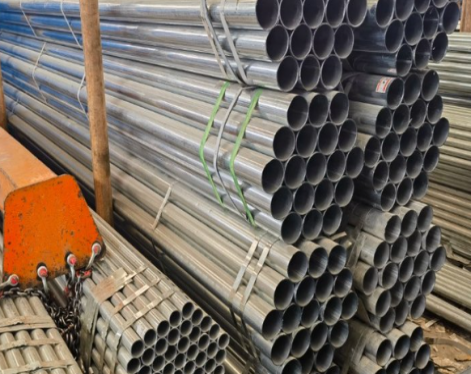
Cold-dip galvanized steel pipe (electro-galvanized pipe) is a corrosion-resistant pipe formed by attaching a zinc layer to the surface of a low-carbon steel pipe through electrolysis or electroplating. Its zinc layer thickness is typically 10-50μm, much thinner than hot-dip galvanized pipe (≥65μm).
Base Material Characteristics: Low-carbon steel (such as Q195, Q235) has good plasticity and weldability, making it an ideal base material for cold galvanizing.
Function of Zinc Layer: The zinc layer isolates oxygen and moisture, preventing the steel pipe from rusting, but its adhesion is weak and it is prone to peeling.
2. Production Process
Acid Pickling and Rust Removal: Removes oxides and oil stains from the steel pipe surface to ensure coating adhesion.
Electroplating Coating: Immerses the steel pipe in an electrolyte solution, and uses current to deposit zinc ions onto the surface, forming a uniform coating.
Post-treatment: Includes cooling, passivation (to enhance corrosion resistance), and surface finish adjustment.
GI vs MS Steel Pipe Comparison
Galvanized steel pipes (GI) and mild steel pipes (MS) are both steel pipes but differ in material, manufacturing, cost, and applications.
1. Material properties
GI pipes: Steel coated with zinc via hot-dip galvanizing for corrosion resistance. Zinc layer can be uneven, prone to corrosion in harsh environments.
MS pipes: Made of low-carbon steel with high strength, wear resistance, and good high-temperature performance. Suitable for structural and industrial use.
2. Manufacturing process
GI pipes: Coated with zinc through hot-dip or electroplating; can affect pipe shape and size.
MS pipes: Formed from steel billets through rolling and drawing; simpler, widely used in industrial steel pipe production.
3. Cost
GI pipes: Higher due to galvanizing treatment.
MS pipes: Lower production cost, simpler process.
4. Applications
GI pipes: Water supply, fire protection, aviation—where corrosion resistance is key.
MS pipes: Petroleum, chemical, natural gas, construction—where strength and durability matter.
What Is Cold Galvanized MS Pipe?
A mild steel pipe is made from low‑carbon steel (typically <0.25% carbon content), known for its good ductility, weldability, and cost‑effectiveness in industrial and structural use.Cold galvanizing refers to applying a zinc‑rich coating onto the pipe surface at ambient temperature through methods like electrogalvanizing or zinc‑rich paint rather than high‑temperature hot dipping. The zinc layer offers protection against rust and environmental wear.
Definition and Process of Cold-Dip Galvanized MS Pipe
1. Basic DefinitionCold-dip galvanized steel pipe (electro-galvanized pipe) is a corrosion-resistant pipe formed by attaching a zinc layer to the surface of a low-carbon steel pipe through electrolysis or electroplating. Its zinc layer thickness is typically 10-50μm, much thinner than hot-dip galvanized pipe (≥65μm).
Base Material Characteristics: Low-carbon steel (such as Q195, Q235) has good plasticity and weldability, making it an ideal base material for cold galvanizing.
Function of Zinc Layer: The zinc layer isolates oxygen and moisture, preventing the steel pipe from rusting, but its adhesion is weak and it is prone to peeling.
2. Production Process
Acid Pickling and Rust Removal: Removes oxides and oil stains from the steel pipe surface to ensure coating adhesion.
Electroplating Coating: Immerses the steel pipe in an electrolyte solution, and uses current to deposit zinc ions onto the surface, forming a uniform coating.
Post-treatment: Includes cooling, passivation (to enhance corrosion resistance), and surface finish adjustment.
GI vs MS Steel Pipe Comparison
Galvanized steel pipes (GI) and mild steel pipes (MS) are both steel pipes but differ in material, manufacturing, cost, and applications.
1. Material properties
GI pipes: Steel coated with zinc via hot-dip galvanizing for corrosion resistance. Zinc layer can be uneven, prone to corrosion in harsh environments.
MS pipes: Made of low-carbon steel with high strength, wear resistance, and good high-temperature performance. Suitable for structural and industrial use.
2. Manufacturing process
GI pipes: Coated with zinc through hot-dip or electroplating; can affect pipe shape and size.
MS pipes: Formed from steel billets through rolling and drawing; simpler, widely used in industrial steel pipe production.
3. Cost
GI pipes: Higher due to galvanizing treatment.
MS pipes: Lower production cost, simpler process.
4. Applications
GI pipes: Water supply, fire protection, aviation—where corrosion resistance is key.
MS pipes: Petroleum, chemical, natural gas, construction—where strength and durability matter.
Advantages vs. Regular Mild Steel Pipe
Compared to uncoated mild steel pipes, cold galvanized pipes offer clear benefits:| Feature | Regular Mild Steel Pipe | Cold Galvanized Mild Steel Pipe |
| Corrosion Resistance | Poor | Improved due to zinc coating |
| Longevity | Short in wet environments | Longer service life outdoors |
| Maintenance | Higher maintenance | Lower maintenance |
| Ideal Usage | Indoor dry locations | Outdoor & humid conditions |