What is "white rust" on galvanized pipes?
White rust, also known in the industry as "wet storage stain," refers to the white or grayish-white powdery or waxy corrosion products that occur when the zinc layer on the surface of hot-dip galvanized steel pipes corrodes abnormally due to prolonged exposure to a humid and poorly ventilated environment during storage or transportation. These products are primarily a mixture of zinc hydroxide (Zn(OH)₂), zinc oxide (ZnO), and basic zinc carbonate.The key to preventing white rust on galvanized pipes lies in cutting off the corrosive environment of "humidity + confinement": passivation treatment must be performed at the factory and the pipes must be thoroughly dried before packaging; during storage, the pipes must be elevated with wooden strips, and tight sealing is strictly prohibited to maintain ventilation and drainage. When outdoors, breathable and rainproof cloth must be used for covering, and fully enclosed plastic film should be avoided (to prevent condensation); during transportation (especially by sea), desiccant must be placed inside the pipes and the box must be opened for ventilation upon arrival at the port; if the surface is found to be damp or slightly white rusted, the pipes should be spread out to dry immediately and cleaned with a hard brush. Do not re-bundle and seal the wet pipes.
Note: The "white rust" (zinc oxide product) on the surface of galvanized pipes does not need to be over-treated. It can be removed with a stiff brush. Excessive polishing will damage the zinc layer.
Several key measures to prevent white rust formation:
1. Use surface treatments to reduce white rust formation on the coating, such as waxing or oiling.2. When galvanized steel wire is used alone, the coating can be passivated or surface alloyed online.
3. Galvanized steel wire or galvanized steel strand should be stored in a dry, well-ventilated warehouse or area.
4. For the wooden reels used for galvanized steel strand, it is recommended to use dry wood that has not been treated with preservatives or fire retardants. The surface of the steel strand wound on the wooden reels should be wrapped to prevent mutual friction and corrosion from humid gases.
5. When transporting by truck, ensure that the wire is not exposed to rain, fog, condensation, or snowmelt during transit.
6. When galvanized steel wire or strand needs to be shipped by sea, use container shipping whenever possible to avoid contact with seawater. In seawater, especially tropical oceans, humidity is very high; therefore, providing a dry environment and good ventilation is particularly important.
Main Causes of White Rust
| Cause | Impact on Galvanized Pipe |
| Rainwater exposure | Accelerates zinc oxidation |
| Poor ventilation | Prevents moisture evaporation |
| High humidity | Creates condensation |
| Tight packaging | Traps moisture between pipes |
| Wet storage floors | Increases surface corrosion |
Preventing white rust from forming during storage and transportation
1. Preventing white rust should begin at the manufacturing stage, but proper storage conditions are also crucial during transportation. For example, galvanized coils and sheets should be stored in a way that allows for interlayer air circulation.2. One of the most effective methods for long-term storage or international transport is the use of vapor phase inhibitors (VPIs). When used correctly, VPIs can reduce the incidence of white rust by up to 90%.
3. Packaging also plays a vital role. An outer layer of moisture-proof film (such as aluminum laminate), followed by a layer of VPI-impregnated paper, and finally a desiccant packet placed inside the coil core is the most effective packaging method.
4. Temperature fluctuations during transportation (especially by sea) can cause condensation inside the container. This phenomenon is known as "container rain." We recommend using a sufficient number of container desiccators or silica gel packs. Real-time humidity monitoring equipment can also provide early warnings for timely intervention.
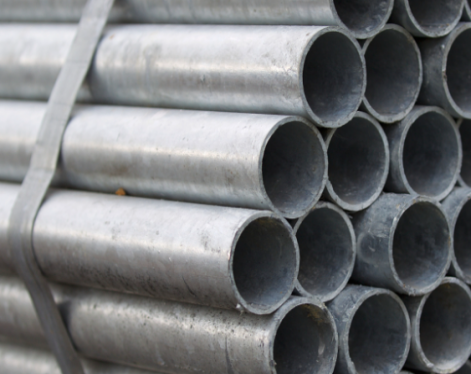
White Rust vs Red Rust on Galvanized Steel: What’s the Difference?
Many buyers confuse white rust with traditional steel rust. However, both corrosion types differ significantly.| Feature | White Rust | Red Rust |
| Affected Layer | Zinc coating | Base steel |
| Appearance | White or gray | Reddish-brown |
| Corrosion Stage | Early-stage | Advanced-stage |
| Main Cause | Moisture and humidity | Steel oxidation |
| Repair Difficulty | Easier | More difficult |
How to Treat White Rust on Galvanized Steel Products?
If white rust has already formed, immediate action is required. Lightweight rust can often be treated with a weak acid solution (such as 5% acetic acid) or a proprietary zinc cleaner, followed by thorough rinsing and drying. However, severe cases may require mechanical removal by light brushing or wiping, followed by a new passivation treatment to restore protection. Never ignore even small stains—they can worsen over time, especially in high humidity environments.Another often overlooked factor is handling. Workers should wear clean gloves when handling galvanized materials, as sweat and grease on hands can create localized damp areas. Furthermore, avoid stacking newly galvanized products immediately after production—allow them to cool and dry completely in the open air before packaging.
The severity of white rust on galvanized steel pipes can also be graded for treatment.
Light white rust appears as fine white powder on the galvanized surface. It can usually be wiped off easily, while the zinc coating remains intact. Clean it with a nylon brush and keep the surface dry and ventilated.
Medium white rust forms obvious white patches that cannot be fully removed by wiping. Slight corrosion may appear on the zinc coating surface. After cleaning, measure the coating thickness and apply a transparent zinc-rich sealant if needed.
Heavy white rust creates thick corrosion layers, peeling, or pitting on the surface. Gray-black rust spots may also appear underneath. Remove all loose corrosion, check the remaining zinc coating, and repair damaged areas with zinc-rich paint or cold galvanizing spray according to ASTM A780
While white rust is considered a "superficial problem that does not affect lifespan" in most standards, it wastes time, causes controversy, and can indeed reduce the thickness of the zinc layer in severe cases. Managing storage and transportation as an "invisible process" is the truly professional approach.
Read more: Corrosion Resistance of Galvanized Seamless Steel Pipe