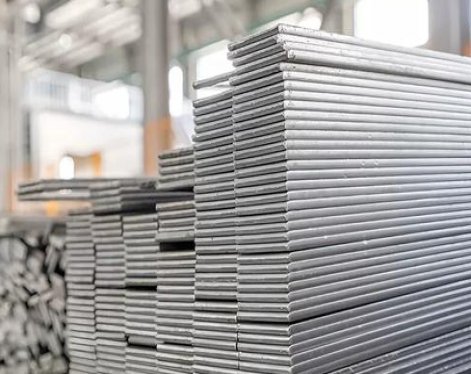
Mild steel flat bars are one of the most versatile and widely used steel products in modern construction and metal fabrication. Engineers, fabricators, and manufacturers rely on them because they combine strength, affordability, and excellent workability in a single material.
Manufacturers produce flat bars in different thicknesses, widths, and lengths to support a wide range of structural and industrial needs such as:
Construction frameworks
Brackets and supports
Machinery components
Fabrication and repair work
General engineering projects
Mild steel flat bars generally provide a tensile strength between 370–440 MPa.
This strength level allows the material to handle moderate to heavy loads without structural failure.
In practical terms, this means the material performs reliably in everyday engineering structures where extreme alloy strength is not required.
2. Yield Strength
The yield strength usually ranges from 250–350 MPa.
Before permanent deformation occurs, the material can absorb significant stress, which improves safety in structural use.
3.Ductility and Formability
High ductility makes mild steel flat bars easy to bend, press, and shape into customized forms without cracking, which is especially beneficial for projects requiring complex geometries.
4.Excellent Weldability
The low carbon content ensures superior weldability using standard welding techniques such as MIG, TIG, and arc welding. Weld joints are strong and consistent when proper procedures are followed.
5.Good Machinability
Mild steel flat bars can be efficiently machined, drilled, and cut with conventional tools, allowing for precise shaping and straightforward fabrication in workshops or on-site.
6. Cost Efficiency
Mild steel remains one of the most economical structural metals available. It provides a strong balance between performance and price, making it ideal for large-scale projects where budget control matters.
7. Corrosion Resistance (With Treatment)
Mild steel does not naturally resist corrosion well. However, protection methods significantly improve its durability:
Galvanization
Painting
Epoxy coating
These treatments extend service life, especially in outdoor or humid environments.
8. Availability and Standard Sizes
Mild steel flat bars are widely available in global markets. Standard specifications often follow:
ASTM A36
EN 10025 S235JR
Suppliers usually offer cutting services, allowing customization based on project requirements.
Industrial fabrication frames
Automotive components
Agricultural machinery parts
General repair and maintenance work
Their flexibility makes them suitable for both heavy-duty and lightweight engineering projects.
Because it offers a strong balance of strength, cost efficiency, and easy fabrication.
Can mild steel flat bar be welded easily?
Yes, its low carbon content makes it highly suitable for standard welding processes.
Is mild steel flat bar suitable for outdoor use?
Yes, but only after applying protective coatings like galvanizing or painting.
What is the difference between ASTM A36 and S235JR?
Both are structural steel grades with similar mechanical properties but follow different regional standards.
Purchasing advice: If you need a general-purpose steel that is easy to process, has a certain strength, and is on a limited budget, low-carbon steel flat bars are the best choice; however, if your project involves seawater, chemicals, or extreme abrasive environments, you should consider stainless steel or high-carbon alloy steel.
What Is a Mild Steel Flat Bar?
A mild steel flat bar is a long, rectangular-shaped steel product made from low-carbon steel. The carbon content typically stays low, which improves ductility and makes the material easier to cut, weld, and form.Manufacturers produce flat bars in different thicknesses, widths, and lengths to support a wide range of structural and industrial needs such as:
Construction frameworks
Brackets and supports
Machinery components
Fabrication and repair work
General engineering projects
Key Properties of Mild Steel Flat Bars
1. Tensile StrengthMild steel flat bars generally provide a tensile strength between 370–440 MPa.
This strength level allows the material to handle moderate to heavy loads without structural failure.
In practical terms, this means the material performs reliably in everyday engineering structures where extreme alloy strength is not required.
2. Yield Strength
The yield strength usually ranges from 250–350 MPa.
Before permanent deformation occurs, the material can absorb significant stress, which improves safety in structural use.
3.Ductility and Formability
High ductility makes mild steel flat bars easy to bend, press, and shape into customized forms without cracking, which is especially beneficial for projects requiring complex geometries.
4.Excellent Weldability
The low carbon content ensures superior weldability using standard welding techniques such as MIG, TIG, and arc welding. Weld joints are strong and consistent when proper procedures are followed.
5.Good Machinability
Mild steel flat bars can be efficiently machined, drilled, and cut with conventional tools, allowing for precise shaping and straightforward fabrication in workshops or on-site.
6. Cost Efficiency
Mild steel remains one of the most economical structural metals available. It provides a strong balance between performance and price, making it ideal for large-scale projects where budget control matters.
7. Corrosion Resistance (With Treatment)
Mild steel does not naturally resist corrosion well. However, protection methods significantly improve its durability:
Galvanization
Painting
Epoxy coating
These treatments extend service life, especially in outdoor or humid environments.
8. Availability and Standard Sizes
Mild steel flat bars are widely available in global markets. Standard specifications often follow:
ASTM A36
EN 10025 S235JR
Suppliers usually offer cutting services, allowing customization based on project requirements.
Comparison Table: Mild Steel Flat Bar Properties
| Property | Typical Range | Key Advantage |
| Tensile Strength | 370–440 MPa | Handles moderate loads |
| Yield Strength | 250–350 MPa | Resists deformation |
| Ductility | High | Easy forming |
| Weldability | Excellent | Strong joint performance |
| Machinability | Good | Easy fabrication |
| Cost | Low | Budget-friendly |
Common Applications of Mild Steel Flat Bars
Building and structural support systemsIndustrial fabrication frames
Automotive components
Agricultural machinery parts
General repair and maintenance work
Their flexibility makes them suitable for both heavy-duty and lightweight engineering projects.
People Also Ask (PAA)
Why is mild steel flat bar so widely used?Because it offers a strong balance of strength, cost efficiency, and easy fabrication.
Can mild steel flat bar be welded easily?
Yes, its low carbon content makes it highly suitable for standard welding processes.
Is mild steel flat bar suitable for outdoor use?
Yes, but only after applying protective coatings like galvanizing or painting.
What is the difference between ASTM A36 and S235JR?
Both are structural steel grades with similar mechanical properties but follow different regional standards.
Purchasing advice: If you need a general-purpose steel that is easy to process, has a certain strength, and is on a limited budget, low-carbon steel flat bars are the best choice; however, if your project involves seawater, chemicals, or extreme abrasive environments, you should consider stainless steel or high-carbon alloy steel.